
Everyday shops
Find stationery, books, uniforms, shoes and household essentials at different price tiers.
Phase 2 · Lower secondary · Ages 12–15
A school shopping list, limited coins and a town full of choices. Phase 2 asks learners to compare, prioritise, save and recover when plans change.

The challenge
This is deliberate. Learners cannot succeed by clicking the cheapest option nine times. They must explore ways to earn, save, compare quality, consider second-hand goods and decide what can wait.
Phase 2 measures the thinking behind the shopping—not simply whether every box was ticked.

Game flow
Check nine school essentials and the money available.
Visit shops, the bank, second-hand market and community spaces.
Balance price, quality, durability and urgency before buying.
Handle events, reach school and review the behaviour report.
The town
Aligned media frames keep each building visually connected to its description on every screen size.
Find stationery, books, uniforms, shoes and household essentials at different price tiers.
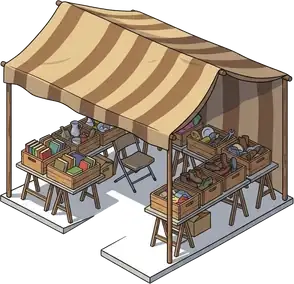
Consider whether a used item can meet the need while protecting the budget.

Keep money in cash, an e-wallet or savings and experience the trade-offs of each.
The school list
The same checklist can lead to very different decisions. Learners compare affordable, standard and premium choices rather than following one perfect route.
Shirt and trousers or skirt.
Compare price, condition and value.
Choose what is useful, not merely fashionable.
Textbooks and exercise books.
Stationery and a calculator.
A practical daily essential.
Assessment
The report looks at patterns in the learner's decisions, making the result useful for reflection and classroom discussion.
How carefully available money is protected.
Whether essentials take priority over temptations.
How often options are compared before purchase.
Whether money is set aside and used thoughtfully.
How scams, emergencies and uncertainty are handled.
How well the learner adapts after a setback.
How effectively the learner becomes school ready.
For facilitators
After the run, ask learners which purchases they would change, where they found value, and how their plan handled unexpected events. The report supports discussion; it is not a personal financial score.
Explore the town, make the trade-offs and see what your choices reveal.
Play FinPintar